If you own a car, chances are you’ve faced electrical issues at some point. From a dead battery to a faulty wiring connection, electrical problems can be frustrating and tricky to diagnose. This is where knowing how to use a car multimeter comes in handy. A multimeter is one of the most essential tools for every car owner or DIY mechanic, helping you perform a reliable electrical fault check and even do a simple car wiring test. In this guide, we’ll walk you through step by step on how to use a car multimeter, what settings to use, and some practical tips to make your life easier.
What is a Car Multimeter and Why Do You Need It
A car multimeter is a device that measures electrical values like voltage, current, and resistance in your car’s electrical circuits. Essentially, it’s a small gadget that can save you trips to the mechanic. Whether it’s checking a blown fuse, testing battery health, or diagnosing faulty wires, a multimeter is a must-have for anyone who wants to handle minor car electrical issues themselves. By using a multimeter, you can perform an electrical fault check accurately, pinpoint the problem, and save both time and money. It’s also a great way to learn more about how your car works, especially if you want to get hands-on with a car wiring test.
Types of Multimeters for Cars
Before we dive into the steps, it’s important to understand the types of multimeters you can use:
- Analog Multimeter – These are older versions with a needle that moves across a scale. They’re less common now but still functional.
- Digital Multimeter (DMM) – This is the most popular choice for car owners today. It gives clear numeric readings, making it easier to detect faults.
For most car owners, a digital multimeter is recommended because it’s accurate, easy to read, and ideal for car wiring tests.
Basic Safety Tips Before Using a Car Multimeter
Working with your car’s electrical system can be risky if you don’t take proper precautions. Here are some safety tips to keep in mind:
- Always switch off the engine before connecting the multimeter, unless you’re checking live circuits.
- Wear gloves and avoid touching exposed wires with your bare hands.
- Start with the multimeter set to a higher voltage range to prevent damage to the device.
- Never let the multimeter probes touch each other while connected to a live circuit.
Step-by-Step Guide to Using a Car Multimeter
1. Checking the Battery Voltage
- Set your multimeter to DC voltage (V⎓) mode.
- Connect the red probe to the positive terminal and the black probe to the negative terminal of the battery.
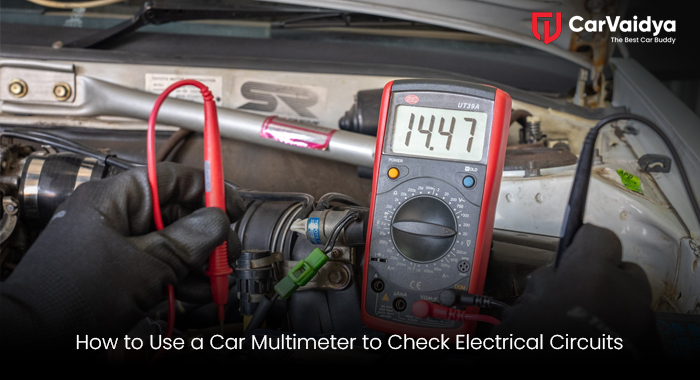
- A healthy car battery should read around 12.6 volts when the engine is off and about 13.7–14.7 volts when the engine is running.
If your reading is significantly lower, it could indicate a weak or failing battery, and it’s time to get it checked.
2. Performing an Electrical Fault Check
- Turn on your multimeter and set it to the voltage or resistance mode, depending on what you want to test.
- For fuses, connect the probes to both ends of the fuse. A good fuse will show continuity or a low resistance value.
- For circuits, test different sections by placing the probes at various points. Any irregular readings can point toward a car wiring fault.
This method is especially useful if a component like the headlights or the horn isn’t working. It helps locate the exact spot of the electrical issue.
3. Conducting a Car Wiring Test
Testing the car wiring ensures there are no broken wires, short circuits, or corrosion that could affect electrical performance:
- Set the multimeter to resistance (Ω) mode.
- Disconnect the battery before testing wires to avoid shocks or short circuits.
- Place one probe at the starting point of the wire and the other at the endpoint.
- A reading close to zero indicates the wire is intact. A higher reading or “OL” (open loop) reading indicates a break in the wire.
This simple car wiring test can save you from more serious electrical failures down the road.
Common Mistakes to Avoid
Even when using a multimeter, mistakes can lead to wrong readings or even damage to your car:
- Not setting the right mode on the multimeter. Always double-check before testing.
- Touching probes together accidentally while connected to a circuit.
- Ignoring the manufacturer’s limits on voltage and current.
By avoiding these mistakes, your electrical fault check becomes more reliable and safe.
Why Using a Car Multimeter is Important
- Saves Money: Avoid unnecessary trips to the garage for minor electrical issues.
- Pinpoints Problems: Quickly identify faulty wires, blown fuses, or dead batteries.
- Improves Safety: Prevents electrical hazards by detecting issues early.
- DIY Friendly: Encourages car owners to learn and manage small repairs themselves.
Knowing how to use a car multimeter is a valuable skill for every car owner. From performing an electrical fault check to a comprehensive car wiring test, a multimeter can help you diagnose and fix problems efficiently. Remember to follow safety precautions, choose the right settings, and take your time to understand readings.
With consistent practice, you’ll soon be able to handle most minor electrical issues on your own, saving both time and money while keeping your car in top shape. And if things get too complex, CarVaidya is always there to assist with professional advice and services.



 By CarVaidya
0 Comments