


Why Does My Car Take Multiple Attempts to Start
 By CarVaidya
- 22 Oct 2026
You turn the key or press the start button; the engine cranks, but nothing happens. Second try, still nothing. On the third attempt, it finally comes to life. If this is becoming a daily routine, your car is warning you that something isn't right — and it usually gets worse before it gets better.
The good news is that most hard-starting problems come down to a handful of causes. In this guide, we'll go through what each one sounds and feels like, simple checks you can do yourself, and when it's time to get a mechanic involved.
Quick Answer
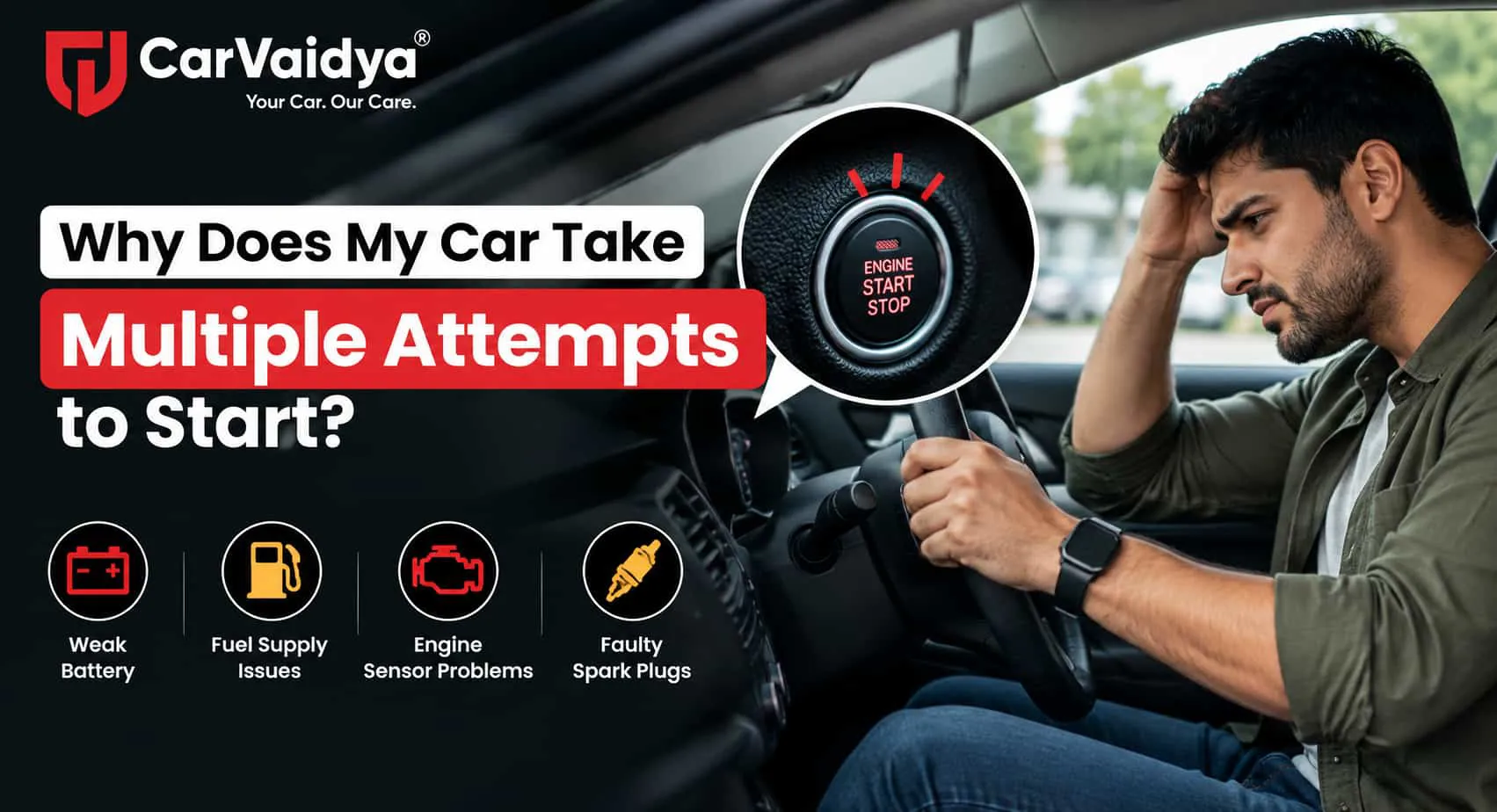
A car that needs multiple attempts to start usually has a problem with one of three things: electrical power (weak battery, corroded terminals or a failing starter motor), fuel delivery (weak fuel pump, clogged fuel filter or leaking injectors), or ignition (worn spark plugs or faulty ignition coils). Faulty sensors, immobiliser issues, and cold weather can also make starting difficult.
First, Listen to How Your Car Tries to Start
The sound your car makes when you try to start it is the best clue to what's wrong. Pay attention next time:
| What happens | Likely area of the problem |
|---|---|
| Rapid clicking, no cranking | Weak battery or poor battery connection |
| Single loud click, nothing else | Starter motor, starter relay, or solenoid |
| Slow, lazy cranking | Weak battery, corroded terminals or tired starter |
| Normal cranking, but engine doesn't fire | Fuel delivery, spark plugs, coils, or sensors |
| Starts, then dies within seconds | Immobiliser, idle control, fuel pressure, or air intake issue |
| Hard to start only in the morning | Weak battery, fuel pressure loss overnight, or glow plugs (diesel) |
Common Reasons Your Car Won't Start on the First Try
1. Weak or ageing battery
This is the most common reason, especially if the battery is more than three years old. A weak battery may have just enough power to turn the engine over slowly, but not enough to also run the fuel pump and ignition properly. You'll often notice slow cranking, flickering dashboard lights, or the problem being worse on cold mornings.
2. Loose or corroded battery terminals
Even a healthy battery can't deliver power through dirty or loose connections. White, green, or bluish deposits on the terminals, or a clamp you can wiggle by hand, can cause on-and-off starting problems. It's one of the easiest things to check and fix.
3. Failing starter motor or relay
The starter motor turns the engine when you crank it. As it wears out, it may work on some attempts and not others. A single click without cranking, a grinding noise, or needing to try several times before the engine turns are typical signs. Sometimes the problem is just the starter relay or solenoid, which is a cheaper fix.
4. Weak fuel pump
The fuel pump sends petrol or diesel from the tank to the engine. When it starts to fail, it may not build enough pressure on the first try. A useful clue: if the car starts more easily after you turn the key to the "ON" position, wait a few seconds, and then crank, the fuel system may be losing pressure. You might also hear a faint whine from the rear of the car, or notice the engine hesitating while accelerating.
5. Clogged fuel filter or poor-quality fuel
A blocked fuel filter restricts fuel flow, making the engine struggle to start and run smoothly. Contaminated or adulterated fuel, or water in the tank after a refill, can cause the same symptoms. If starting trouble began right after a fill-up at a new fuel station, that's worth noting.
6. Leaking fuel injectors or pressure regulator
If injectors leak or the fuel pressure regulator is faulty, fuel pressure can drop while the car is parked. The engine then needs a few cranks to rebuild pressure before it fires. In some cases, you may notice a fuel smell after starting.
7. Worn spark plugs or ignition coils (petrol cars)
Spark plugs ignite the fuel inside the engine. When they're worn or fouled, the spark is weak, and the engine takes longer to catch. Faulty ignition coils have a similar effect. Rough idling, poor mileage, and jerking during acceleration often come along with this problem.
8. Faulty glow plugs (diesel cars)
Diesel engines use glow plugs to warm the combustion chamber before starting. If one or more fail, the engine becomes hard to start, especially in winter. Always wait for the glow plug indicator on the dashboard to go off before cranking a diesel car.
9. Faulty sensors
Modern engines rely on sensors to decide how much fuel to inject and when to create a spark. A failing crankshaft position sensor can stop the engine from starting at all, or cause it to start only after several tries. A bad coolant temperature sensor can send the wrong reading, so the engine gets the wrong fuel mix during cold or hot starts. These usually trigger a check engine light, though not always right away.
10. Dirty throttle body or air intake problems
Carbon build-up in the throttle body or a dirty air filter can restrict air entering the engine. The car may crank, start briefly and stall, or idle unevenly. A throttle body cleaning during service often helps.
11. Immobiliser or key issues
If the car's immobiliser doesn't recognise your key, it can block the engine from starting, or let it start and then cut it off. A weak key fob battery or a damaged key chip is often the cause. If your spare key starts the car without trouble, the problem is likely with the main key.
12. CNG-fitted cars
Many CNG cars in India are designed to start on petrol and switch to CNG automatically. If the petrol tank is nearly empty, the petrol side hasn't been used for a long time, or the switchover settings are faulty, starting becomes difficult. Keep some petrol in the tank and have the CNG kit serviced regularly.
Simple Checks You Can Do Yourself
- Watch the dashboard lights. If they dim heavily or go off when you crank, the battery or its connections are the likely problem.
- Inspect the battery terminals. Look for corrosion and check that the clamps are tight. Clean them with a wire brush if needed.
- Try the "key on, wait" method. Turn the key to ON (or press start without the brake on push-button cars) and wait 3 to 5 seconds before cranking. If this helps, the fuel system is likely losing pressure.
- Try your spare key. This quickly rules immobiliser and key fob issues in or out.
- Check the fuel level. A very low tank, especially on a slope, can make starting harder.
- Note when it happens. Only in the morning, only after a long drive, only in winter, or after refuelling — these patterns help a mechanic diagnose the issue much faster.
What Not to Do When Your Car Won't Start
- Don't crank continuously. Keep each attempt to around 10 seconds and wait about 30 seconds to a minute between tries. Long cranking can overheat the starter and drain the battery.
- Don't pump the accelerator in a modern fuel-injected car. It doesn't help and can flood the engine.
- Don't ignore it. A car that takes three tries today may not start at all next week, possibly when you're far from home.
- Don't replace parts by guessing. Replacing the battery when the real issue is the fuel pump just wastes money. Get a proper diagnosis.
When Should You See a Mechanic?
It's time to get your car checked if:
- The problem happens regularly, not just once
- The check engine light is on
- You hear grinding, single clicks or unusual noises while starting
- You smell fuel around the car
- The car starts and then stalls, or runs rough after starting
- A new battery hasn't solved the problem
A mechanic can test the battery and starter, check fuel pressure, scan for error codes, and inspect the ignition system to find the exact cause.
How to Prevent Starting Problems
- Get the battery tested at every service, especially after it crosses three years.
- Replace spark plugs, air filter and fuel filter at the intervals in your owner's manual.
- Refuel at trusted fuel stations and avoid running the tank close to empty regularly.
- Keep battery terminals clean and tight.
- Replace your key fob battery every couple of years or when the range drops.
- If the car sits unused for long, start and drive it every few days.
Car Struggling to Start? Let CarVaidya Check It
Don't wait for your car to leave you stranded. Book a car inspection or service with CarVaidya, and our trained mechanics will check the battery, starter, fuel system and ignition to find the real cause. If your car won't start at all, CarVaidya's roadside assistance can help you get moving again.
Frequently Asked Questions
Why does my car start on the second or third try?
This usually points to a weak battery, a failing starter, or a fuel system that loses pressure while the car is parked. The first attempt builds up pressure or power, and the next one succeeds. Worn spark plugs and faulty sensors can also cause this.
Can a bad battery cause hard starting even if the lights work?
Yes. Lights need very little power, while starting the engine needs a large burst of current. A weak battery can run the lights and radio normally but still struggle to crank the engine.
How do I know if it's the fuel pump or the battery?
If the engine cranks slowly or just clicks, the battery or starter is the likely cause. If it cranks at normal speed but doesn't fire, the fuel system, spark plugs or sensors are more likely. A mechanic can confirm with a battery test and a fuel pressure test.
Why is my car hard to start in the morning but fine later in the day?
Cold mornings reduce battery power, and fuel pressure can drop overnight if injectors or the pressure regulator leak. In diesel cars, weak glow plugs are a common cause of cold-start trouble.
Is it safe to keep driving a car that takes multiple attempts to start?
It may run fine once started, but the problem usually gets worse. It's best to get it checked soon so you aren't stranded somewhere inconvenient, and so a small fix doesn't turn into a bigger repair.
How much cranking is too much?
Keep each attempt to about 10 seconds and rest for 30 seconds to a minute between tries. If the car doesn't start after three or four attempts, stop and get help to avoid damaging the starter or draining the battery.
Final Thoughts
A car that needs multiple tries to start is rarely a mystery once you pay attention to the signs. Listen to the sound it makes, notice when it happens, and do the simple checks first. If the problem keeps coming back, get a proper diagnosis — it's almost always cheaper to fix it early than to deal with a car that won't start at all.

0 Comments