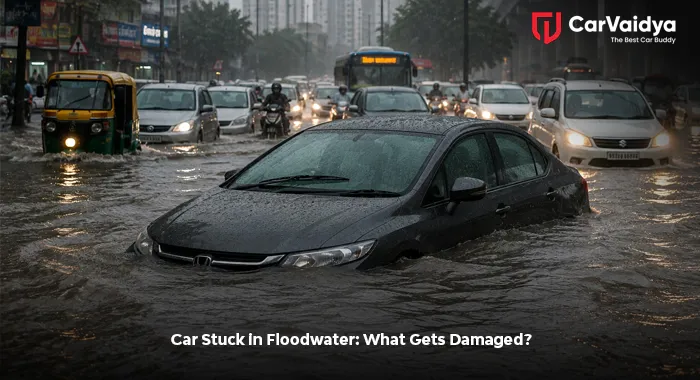
Monsoon can be a difficult time for car owners in India, especially when roads get waterlogged within a short time. A car stuck in floodwater can suffer much more damage than what you can see from outside. Water may enter the engine, electrical system, cabin, transmission and other important parts. In some cases, a car may look normal after the water goes down, but serious problems can appear after a few days.
If your car has been through deep water, don't immediately start it and drive away. Understanding car water damage in India's conditions and checking the vehicle properly can save you from a costly repair later.
What Happens When a Car Gets Stuck in Floodwater?
Floodwater can enter a vehicle through the air intake, doors, floor, exhaust and other openings. The amount of damage mainly depends on how deep the water was, how long the car remained submerged, and whether the engine was running at that time.
Even a few inches of dirty floodwater can create problems if it reaches sensitive electrical components. Mud, sewage, chemicals, and debris in floodwater can make the damage worse.
Engine Damage From Flood Water
The engine is one of the biggest concerns after flooding. If water enters the engine through the air intake, it can reach the cylinders. Water does not compress like air, so trying to start the engine can cause severe internal damage. This condition is commonly known as hydraulic lock or hydrolock.
Possible engine damage from flood water includes:
- Bent connecting rods
- Damaged pistons or cylinder components
- Water mixed with engine oil
- Damaged air filter and intake system
- Corrosion inside engine components
- Starting failure or unusual engine noise
Important: If floodwater reached the air intake or engine bay, avoid starting the car until a professional checks it.
Car Electrical Damage From Water
Modern cars use many electronic modules, sensors, wiring harnesses, and control units. This makes car electrical damage from water another major concern after flooding.
Water can damage components such as:
- ECU and other electronic control modules
- Fuse boxes and relays
- Wiring and connectors
- Power windows and central locking
- Infotainment system
- Airbag control systems
- Parking sensors and cameras
- ABS and other safety-related electronics
The biggest issue is that electrical damage may not appear immediately. Moisture trapped inside connectors can lead to corrosion and intermittent faults weeks later.
Transmission, Brakes and Suspension Can Also Suffer
Floodwater does not only affect the engine. Depending on water depth, the transmission, differential, wheel bearings, brakes and suspension components can also be affected.
Contaminated fluid is a common concern. Water entering transmission or differential oil can reduce lubrication and increase wear. Brakes may temporarily lose performance after being soaked, while mud and debris can remain around brake components.
What to Do If Your Car Is Flooded?
If you are wondering what to do if car is flooded, the first rule is simple: don't try to start it just to check whether it works.
- Move yourself to a safe location if floodwater is still rising.
- Do not restart the engine after water exposure.
- Disconnecting the battery should be done only when it is safe and appropriate for the vehicle.
- Contact a reliable recovery service.
- Have the engine oil, air filter and fluids inspected.
- Check all electrical systems and electronic modules.
- Dry and clean the cabin properly.
- Get a professional inspection before driving the vehicle.
Flooded Car Damage Checklist
Use this basic flooded car damage checklist when your vehicle has gone through standing water:
- Check water level reached inside the cabin.
- Inspect engine air intake and air filter.
- Check engine oil for water contamination.
- Inspect transmission and differential fluids.
- Scan the car for electronic fault codes.
- Inspect wiring, connectors, fuses and control modules.
- Check brakes, wheel bearings and suspension.
- Inspect carpets, seats and seat-belt mechanisms.
- Check airbags and other safety systems.
- Look for mud, debris and corrosion underneath the car.
- Check the battery and charging system.
Car Recovery After Flooding: Why Professional Inspection Matters
Car recovery after flooding should not end with simply towing the vehicle to a workshop. A proper inspection is needed to understand the actual condition of the car.
A professional technician can inspect mechanical parts, scan electronic systems, check fluids, examine the underbody and identify signs of corrosion or water entry. This is especially important for newer cars because they have many electronic systems hidden in different areas.
For a detailed flood-damaged car inspection, you can consider a professional inspection service such as CarVaidya, where the vehicle can be checked for mechanical, electrical and other damage before you spend money on repairs.
Can a Flood Damaged Car Be Repaired?
Yes, a flood-damaged car can sometimes be repaired, but the repair cost depends on the water level and affected components. If only the lower cabin area was exposed, repairs may be manageable. However, if water reached the engine, transmission, ECU, airbags, and major wiring, the cost can become very high.
In severe cases, repairing every affected component may not make financial sense. This is why getting an inspection before approving major repairs is a smart decision.
Should You Buy a Flood-Damaged Car?
Buying a flood-affected used car without proper checking can be risky. Sellers may clean and dry the vehicle before putting it on sale, while hidden electrical or corrosion problems can remain.
If you are considering such a vehicle, get a professional inspection, check service records and look for signs of water entry before making the payment. A lower purchase price does not always mean a better deal if major repairs are waiting later.
A car stuck in flood water can suffer damage to the engine, electrical system, transmission, brakes, suspension and interior. The most important thing is not to restart the vehicle without inspection. Get it recovered safely, check fluids and electronics, dry the interior and complete a proper inspection before driving.
Flood damage is not always visible from outside. A professional check can help you understand the actual repair requirements and avoid spending money on a vehicle that has hidden problems.
You can read some other articles
The
5 Biggest Lies Used Car Sellers Tell—and How to Spot Them
EV
Charging Stations in Mumbai Near You: Locations, Costs & Charging Time
Most
Expensive Luxury Cars in Pakistan: Prices and Features in 2026



 By CarVaidya
0 Comments