


How to Check the Manufacturing Date of a New Car Using the VIN
 By CarVaidya
- 12 Nov 2026
When you buy a new car, you naturally expect a recently built one. But dealerships sometimes hold stock for months, especially around year-end or before a model update. A car that rolled off the line many months ago can still be sold as "new," and you may not realise it until you sell it years later and the buyer points out the older manufacturing date.
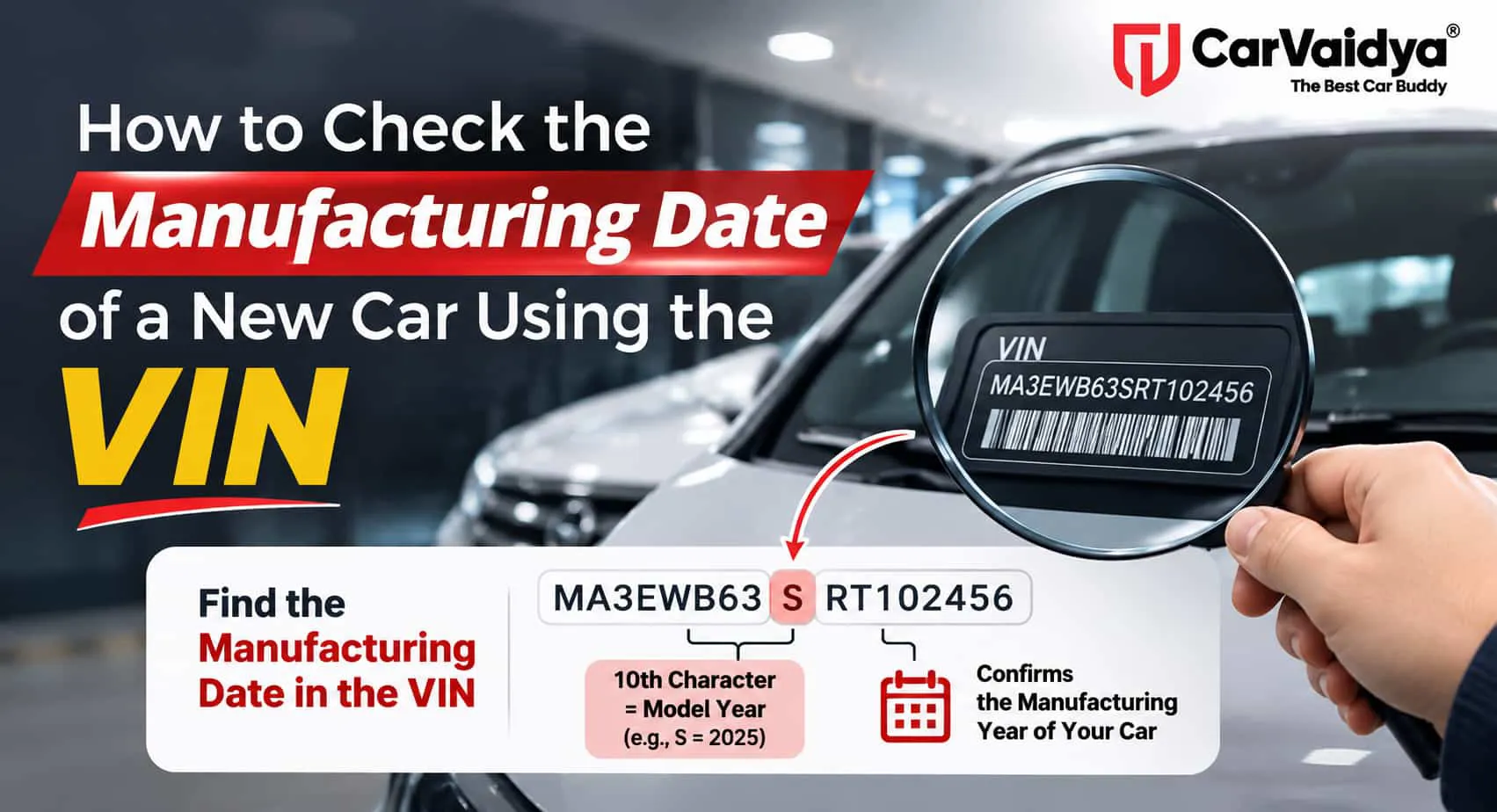
The easiest way to check is through the car's VIN (Vehicle Identification Number), also called the chassis number. This guide explains where to find the VIN, how to decode the manufacturing month and year, brand-wise positions for popular cars in India, and other documents you can use to confirm the date before delivery.
Quick Answer
Find the 17-character VIN on the car's VIN plate, windscreen corner, door frame or documents. In most cars, the 10th character shows the year (for example, S = 2025, T = 2026). The month is coded in a brand-specific position — for example, the 11th character in Maruti Suzuki, the 12th in Tata and Mahindra, the 9th in Honda, and the 19th character of the longer chassis number in Hyundai. Month letters usually run A = January to M = December, skipping I. Always confirm the result with the VIN plate, the sale certificate (Form 21) or the RC.
Why the Manufacturing Date Matters
- Resale value: Used car buyers and valuers look at the manufacturing year, not just the registration year. A car built in late 2025 but registered in 2026 may be treated as a 2025 car at resale.
- Storage wear: A car that has stood for months may have a weak battery, older tyres, flat spots or minor stockyard damage.
- Insurance value: The car's insured value (IDV) reduces with age, so the build date can matter in the long run.
- Negotiation: Older stock is often sold with extra discounts. Knowing the build date helps you ask for a fair deal.
- Model updates: An older unit may miss features or changes added to newer production batches.
What Is a VIN?
The VIN is a unique 17-character code given to every car by its manufacturer. No two cars share the same VIN. It identifies the manufacturer, the vehicle type, the production plant and a unique serial number, and in most cars it also contains the year and month of manufacture.
Cars made in India usually have VINs that begin with "M", which indicates India as the region of manufacture. The letters I, O and Q are not used in VINs, to avoid confusion with the numbers 1 and 0.
Basic structure of a VIN
| Characters | What they generally represent |
|---|---|
| 1 to 3 | Manufacturer identifier (World Manufacturer Identifier) |
| 4 to 9 | Vehicle details such as model, body type and engine; some brands also use one of these for the month |
| 10 | Year code (in most cars) |
| 11 to 17 | Plant code, month code (in some brands) and the car's serial number |
Where to Find the VIN on a New Car
- VIN plate or sticker: Usually on the driver's or passenger's door frame (B-pillar), or in the engine bay. In many cars, this plate also prints the month and year of manufacture directly.
- Windscreen corner: Some cars show the VIN at the bottom corner of the windscreen, visible from outside.
- Chassis stamp: Punched into the body, often under the front passenger seat floor carpet, near the bonnet hinge or on the firewall.
- Documents: The proforma invoice, sale invoice, insurance policy, Form 21 (sale certificate) and RC all mention the chassis number.
Tip: Ask the dealer for the VIN of the car allotted to you before making the final payment. Check it against the car itself on delivery day.
How to Decode the Year From the VIN
In most cars, the 10th character of the VIN represents the year. Letters and numbers follow a fixed international cycle. Here are the codes for recent years:
| 10th character | Year | 10th character | Year |
|---|---|---|---|
| L | 2020 | R | 2024 |
| M | 2021 | S | 2025 |
| N | 2022 | T | 2026 |
| P | 2023 | V | 2027 |
Letters I, O, Q, U and Z, and the number 0, are not used as year codes. Some manufacturers use this character as the "model year," which can differ slightly from the calendar year the car was built.
How to Decode the Month From the VIN
Most brands that include the month in the VIN use letters in this order:
| Code | Month | Code | Month |
|---|---|---|---|
| A | January | G | July |
| B | February | H | August |
| C | March | J | September |
| D | April | K | October |
| E | May | L | November |
| F | June | M | December |
The letter "I" is skipped, so September is "J". The position of the month code differs from brand to brand, as shown below.
Brand-Wise VIN Positions for Popular Cars in India
| Brand | Year character | Month character |
|---|---|---|
| Maruti Suzuki | 10th | 11th |
| Hyundai | 10th | 19th character of the full chassis number (usually stamped on the body, e.g. under the seat) |
| Tata Motors | 10th | 12th |
| Mahindra | 10th | 12th |
| Honda | 10th | 9th |
| Skoda (2021 onwards) | 10th | 6th |
| Other brands | Usually 10th | Varies — check the VIN plate, Form 21 or ask the dealer |
These positions are based on commonly reported VIN formats. Manufacturers can change their VIN coding over time, so always confirm the date with an official document.
Example: Decoding a Maruti Suzuki VIN
Suppose the 10th character of a Maruti Suzuki VIN is S and the 11th character is J. From the tables above, S = 2025 and J = September. The car was built in September 2025. If you're taking delivery in November 2026, that car has been in stock for over a year — worth knowing before you sign.
Other Ways to Confirm the Manufacturing Date
Since VIN formats vary, it's best to cross-check the date with at least one of these:
- VIN plate: Many cars print the month and year of manufacture directly on the plate in the door frame or engine bay.
- Form 21 (Sale Certificate): Issued by the dealer for registration, it mentions the month and year of manufacture.
- Registration Certificate (RC): Once registered, the RC and the VAHAN record show the manufacturing month and year.
- Dealer confirmation: Ask the dealer to confirm the build date in writing before you make the final payment.
- Component dates: Tyre date codes, battery labels and glass markings give extra clues. If they are much older than the claimed date, ask questions.
How Old Is Too Old for a New Car?
There's no fixed rule. A gap of a few weeks to a couple of months between production and delivery is normal, given transport and dealer stocking. Cars built in the previous calendar year, or several months before delivery, are where buyers should be more careful.
An older unit isn't automatically a bad car, but you should:
- Ask for a fresh unit if one is available.
- Negotiate an additional discount for older stock.
- Get the car thoroughly checked for battery health, tyre age, storage damage and rust.
- Make sure the warranty starts from your delivery date, and confirm this in writing.
When to Check the VIN
- At allotment: Ask for the VIN as soon as a car is allotted to you, and decode the date.
- Before final payment: Raise any concern about older stock before paying the full amount.
- At delivery: Match the VIN on the car with the invoice, insurance and Form 21 to make sure you're receiving the same car.
Book a CarVaidya Pre-Delivery Inspection
Checking the VIN is just one part of a proper new car check. A CarVaidya Pre-Delivery Inspection (PDI) verifies the VIN and manufacturing details, and checks the body, paint, panel gaps, tyres, battery, underbody, electricals and more, with a digital report you can share with the dealer before you accept delivery.
Frequently Asked Questions
Which VIN character shows the manufacturing year?
In most cars, the 10th character of the VIN shows the year. For example, S stands for 2025 and T for 2026.
How do I find the manufacturing month from the VIN?
It depends on the brand. Maruti Suzuki commonly uses the 11th character, Tata and Mahindra the 12th, Honda the 9th, and Hyundai the 19th character of its longer chassis number. Month letters usually run from A (January) to M (December), skipping I.
Is the chassis number the same as the VIN?
In everyday use in India, yes. The 17-character chassis number on your RC and invoice is the VIN. Some brands, like Hyundai, stamp a longer chassis number on the body with extra characters for the month.
Where else can I check my car's manufacturing date?
Check the VIN plate in the door frame or engine bay, Form 21 (sale certificate), the RC or VAHAN record, or ask the dealer to confirm it in writing.
Should I accept a new car manufactured last year?
You can, but go in with your eyes open. It may have lower resale value and storage-related wear. Ask for a fresh unit or an extra discount, and get the car properly inspected before delivery.
Does the warranty start from the manufacturing date or the delivery date?
Manufacturer warranties generally start from the date of sale or delivery to the first owner, not the manufacturing date. Check your warranty booklet and confirm with the dealer.
Final Thoughts
Your car's VIN tells you more than most buyers realise. With a quick look at the 10th character and your brand's month code, you can find out when your new car was actually built. Confirm it with the VIN plate or Form 21, and raise any concerns before the final payment. A few minutes of checking can protect your resale value and help you get a fair deal.
You can read some other articles
State-wise List of EV Charging Stations Data
One Missed Service Can Cost You Thousands: The Most Expensive Car Owner Mistakes
Before You Buy That Dream SUV, Read These Hidden Ownership Costs

0 Comments