If your engine heats up too much or your radiator looks low on coolant, it’s time to check the cooling system. One of the easiest ways to understand your coolant’s health is by using a coolant tester. Many car owners don’t know the real reason behind engine overheating, and most of the time, the coolant mixture is not balanced. A coolant tester helps you check if the antifreeze level is correct and if your engine is safe for long drives. In this guide, I will explain how to use a coolant tester step-by-step, how to do a radiator inspection, and how you can avoid car overheating issues before they become expensive repairs.
What Is a Coolant Tester?
A coolant tester is a small, handheld tool that checks the freeze point, boiling point, and overall mixture quality of your car’s coolant. It tells you whether the coolant has the right amount of antifreeze to protect your engine in both hot and cold weather. Some testers are hydrometer types, and some digital testers are also available in the market. If your coolant is weak or dirty, your engine can heat up fast. A coolant tester helps you catch these problems early.
Why You Should Test Your Coolant Regularly
Testing coolant is important for many reasons:
- Helps prevent car overheating
- Checks if the coolant concentration is correct
- Alerts you if the coolant is old or contaminated
- Saves you money on big repairs
- Makes your car safe for long road trips
- Helps maintain radiator performance
A simple 5-minute test can make a big difference. Many car workshops, including services like CarVaidya, recommend coolant checking as part of routine maintenance.
Things You Need Before Testing Coolant
Before you begin, keep these things ready:
- Coolant tester (hydrometer or digital)
- Clean cloth
- Gloves (optional but helpful)
- Good lighting near the engine bay
Make sure the engine is cool. Never open the radiator cap when the engine is hot, because hot coolant can spray out and burn you.
Step-by-Step Guide: How to Use a Coolant Tester
Using a coolant tester is not complicated. Just follow these steps carefully:
Step 1: Open the Radiator Cap (Only When Cool)
- First, let your car sit for at least 30–40 minutes after driving. When the engine is cool, slowly open the radiator cap. A cold system prevents burns and gives an accurate reading.
Step 2: Insert the Coolant Tester in the Radiator
- Take the coolant tester and insert its tube or nozzle inside the radiator. Make sure the tester tip is deep enough to collect the coolant sample properly.
- For hydrometer testers, you need to squeeze the bulb to pull coolant inside the tester.
Step 3: Check the Reading in the Tester
Now, look at the tester reading:
- Hydrometer testers show floating balls or scales
- Digital testers show temperature protection values
- Some testers show the freeze point and boiling point directly
If the reading says the coolant protects up to –20°C, it means the coolant concentration is good. If the reading is low, you need to replace or top up the coolant with the right mixture.
Step 4: Inspect Coolant Color and Smell
- Coolant should look clean and bright (green, yellow, pink, or blue depending on type). If it is brown, rusty, dirty, or smells burnt, the coolant is bad and should be flushed.
- This part is also an important part of radiator inspection because dirty coolant usually means rust formation inside the radiator.
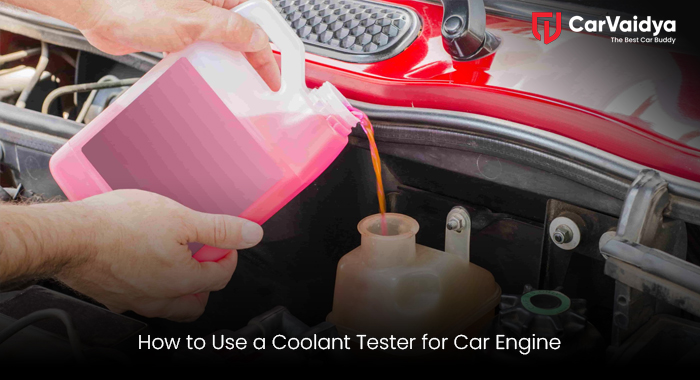
Step 5: Refill or Replace Coolant If Needed
If the tester reading is not in the safe zone, you have two choices:
- Top up coolant with premixed 50:50 solution
- Do a full coolant replacement
- If the coolant is extremely dirty, do a radiator flush
If you are unsure, a car service provider like CarVaidya can guide you with the correct coolant choice for your model.
Extra Checks to Prevent Car Overheating
While you are testing coolant, look at these things too:
- Coolant Level: If the coolant is low, your car may overheat soon. Always maintain the correct level in the radiator and overflow tank.
- Radiator Hoses: Check if hoses have cracks, swelling, or leakage. Damaged hoses can make coolant leak and cause sudden overheating.
- Radiator Cap: A weak or old cap cannot hold pressure inside the cooling system. Sometimes, simply replacing the radiator cap fixes overheating issues.
- Water Pump Condition: If your engine overheats even with good coolant, the water pump may not be circulating coolant properly.
- Cooling Fan Working: When the fan does not turn on, the engine gets hot, especially in traffic. Make sure the fan works at the right time.
How Often Should You Test Coolant?
Most mechanics recommend testing coolant every 6 months. But if you notice any of these signs, test immediately:
- Car overheating
- Coolant leaking
- Strange smell from the engine
- The heater is not working properly
- The temperature gauge is rising fast
Regular coolant check helps extend engine life and keep your car running smoothly.
Learning how to use a coolant tester is one of the simplest DIY car maintenance tasks. It helps you understand the coolant strength, detect radiator issues, and prevent engine overheating before it becomes a costly repair. With regular radiator inspection and coolant testing, you can keep your engine healthy for years. If you feel unsure at any step, you can always take help from expert platforms like CarVaidya, where professionals guide you in the right direction for coolant and engine care.
You can read some other articles
Choosing the Right Motor Oil: Navigating Viscosity and Grades
Exploring the World of Hybrid and Electric Vehicle Maintenance
Why Paint Protection Matters for Your Car



 By CarVaidya
0 Comments