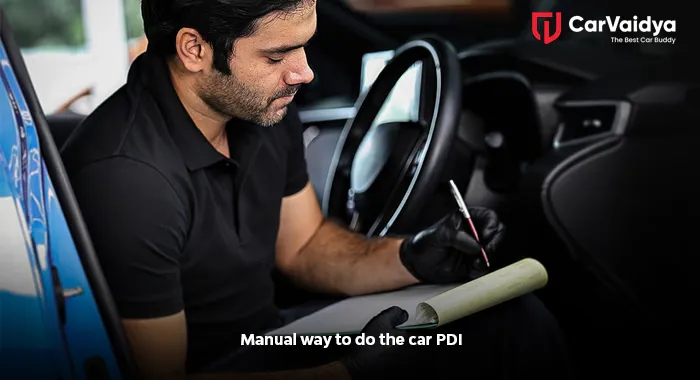
PDI stands for Pre-Delivery Inspection. It is the process of checking a new car before accepting delivery from the dealership. A manual car pre-delivery inspection helps buyers identify scratches, dents, missing accessories, warning lights, and other issues before they complete the delivery process.
Many buyers feel excited when they see their new car at the showroom. Due to this excitement, they sometimes skip important checks and notice problems after bringing the vehicle home. A proper PDI helps you avoid such situations and gives you more confidence before taking ownership.
The good news is that you can perform a basic new car PDI yourself without a mechanic. You only need some time, a phone camera, a torch, and a checklist to inspect the vehicle properly.
How to Do Car PDI Manually: Step-by-Step Guide
1. Check the Car in Daylight
Always try to inspect your new car during daylight. Bright showroom lights can hide small scratches, paint defects, and dents. Ask the dealership to park the vehicle in an open, well-lit area.
Start by walking around the car slowly and checking every panel.
- Look for scratches, dents and paint marks on the bonnet, doors, roof and boot.
- Check whether the paint shade looks consistent across different panels.
- Inspect the front and rear bumpers for cracks or loose fittings.
- Check the headlights, tail lamps, fog lamps and reflectors for damage.
- Look for gaps between doors, the bonnet and the boot lid.
Take photographs of any issue you notice. Ask the dealer to resolve the problem and record the agreed action before accepting delivery.
2. Inspect the Tyres and Wheels
Tyres are an important part of your new car inspection. Check all four tyres and the spare tyre, if supplied.
- Verify that the tyre brand and size match the vehicle specifications.
- Look for cuts, bulges, or other visible damage.
- Check the alloy wheels or steel rims for scratches.
- Inspect the tyre manufacturing date if you want to understand the tyre's age.
- Check tyre pressure through the vehicle display or a suitable pressure gauge.
- Confirm that the spare wheel, puncture repair kit, and jack are included as applicable.
You can also use a suitable tyre stone remover hook, such as the ROBZY Multipurpose Car Tire Stone Remover Hook, to remove small stones stuck in the tyre grooves. However, do not use sharp tools carelessly or damage the tyre rubber.
3. Check the Car Interior and Seats
The interior inspection is another essential step when learning how to inspect a new car before delivery. Open all doors and check the condition of the cabin.
- Inspect the seats for stains, cuts, loose stitching, and damage.
- Check the dashboard, door trims, roof lining and carpets.
- Make sure the seat adjustment controls work properly.
- Check the seat belts, buckles and child-seat mounting points where applicable.
- Inspect the steering wheel, gear selector and pedals.
- Confirm that floor mats, tool kits and other promised accessories are available.
You can use Car Interior Cleaning Wet Tissue Paper to remove light dust from suitable interior surfaces. First, check the product label and test it on a small, hidden area. Avoid using unsuitable cleaning chemicals on leather, screens or sensitive dashboard finishes.
4. Test the Electrical Features
Modern cars include many electrical features, and you should test them before delivery. Switch on the ignition and check the vehicle's features according to the owner's manual.
- Test all power windows and central locking.
- Check the infotainment screen, speakers, Bluetooth and USB ports.
- Test the air conditioner, heater and cabin blower at different speeds.
- Check the horn, indicators, headlights, brake lights and hazard lights.
- Verify the rear camera, parking sensors and other installed features.
- Check the instrument cluster for warning lights and unusual messages.
Some warning lights appear briefly during the ignition self-check and then disappear after starting the vehicle. However, warning lights that remain illuminated should be explained by the dealership before you proceed.
5. Inspect the Engine Bay
You can perform a basic engine bay inspection without removing any parts. Ask the dealer to show you the engine compartment and inspect it while the engine is switched off and cool.
- Look for visible oil or coolant leaks.
- Check for loose-looking hoses, damaged wiring or broken plastic covers.
- Look for unusual corrosion or signs of rough handling.
- Check the battery area for visible damage or loose mounting.
- Confirm that the engine bay looks reasonably clean and complete.
Do not touch hot components, exposed electrical connections, or moving engine parts. Never open a hot coolant reservoir. If you notice anything unusual, ask the dealership's technical team to inspect it.
6. Check the Windshield and Glass
Glass damage can be difficult to notice if you inspect the car in a hurry. Check the windshield from both inside and outside.
- Look for cracks, chips, scratches, and visible distortions.
- Inspect the side windows and rear windshield.
- Check the windshield wipers and washer spray.
- Confirm that the rear defogger works, if equipped.
- Look for damage around the glass edges and rubber seals.
A Car Windshield Cleaning Brush can help remove dust and improve visibility while inspecting the glass. Use a clean, soft brush suitable for automotive glass to avoid scratches.
7. Verify the Chassis Number and Documents
Documentation is just as important as the physical inspection. Check the vehicle details against the documents supplied by the dealership.
- Match the Vehicle Identification Number (VIN) or chassis number with the invoice and relevant records.
- Verify the engine number where applicable and accessible.
- Check the model, variant, colour and fuel type.
- Review the manufacturing month and year using the available vehicle records.
- Check the insurance details, invoice, and registration-related documents.
- Confirm the warranty terms, service schedule and roadside assistance details.
- Check that all promised accessories and offers appear in the final agreement or invoice where applicable.
If you find a mismatch, ask the dealership to correct or explain it before completing the paperwork.
8. Take a Short Test Drive
If the dealership permits it, take a short test drive with an authorised representative. Follow the dealership's rules and local traffic regulations.
- Check whether the steering feels normal.
- Listen for unusual noises from the engine, suspension or brakes.
- Test the brakes gently in a safe location.
- Check the gear shifts and clutch operation, where applicable.
- Notice any unusual vibrations or pulling to one side.
Do not ignore unusual sounds or warning messages simply because the car is new. Ask the dealership to investigate any concern.
What Should You Check Before Taking Delivery of a New Car?
Use this quick checklist before signing the final delivery acknowledgement.
- Exterior paint, panels and glass checked.
- Tyres, wheels and spare tyre kit checked.
- Interior, seats and seat belts checked.
- Lights, AC, infotainment and electrical features tested.
- Engine bay visually inspected.
- VIN and documents verified.
- Manufacturing details and warranty confirmed.
- Accessories and promised items received.
- Any defects photographed and reported to the dealer.
Can I Do a New Car PDI Without a Mechanic?
Yes, you can perform a basic manual PDI without a mechanic. A careful visual inspection and functional test can help you identify many common delivery issues. However, a manual inspection cannot replace professional diagnostics or a detailed mechanical examination.
For additional confidence, you can explore the
CarVaidya car inspection service. A professional inspection can help check areas that are difficult for a first-time buyer to assess, including diagnostic trouble codes, underbody condition and certain mechanical issues.
Common Mistakes to Avoid During Manual Car PDI
- Do not inspect the vehicle only under showroom lighting.
- Do not rush through the inspection because of delivery celebrations.
- Do not assume every feature works just because the car is new.
- Do not ignore small dents, scratches or missing accessories.
- Do not sign off on unresolved defects without documenting them.
- Do not dismantle vehicle parts or perform unsafe mechanical checks yourself.
Learning how to do car PDI manually can help you make a more informed decision before taking delivery of your new vehicle. Check the exterior, interior, tyres, electrical systems, engine bay, glass and documents step by step. Take photographs, ask questions and get any concerns recorded by the dealership.
A little extra time during PDI can help you avoid unnecessary confusion after delivery. If you are unsure about mechanical or electronic components, consider a professional inspection through CarVaidya before completing the delivery process.



 By CarVaidya
0 Comments