When you buy a car or bike in India,
the most important document you receive is the Registration Certificate (RC).
Still, many vehicle owners do not fully understand what the RC actually shows.
They search online for RC details explained because they want clarity
about the owner's name, hypothecation, and vehicle specifications. In this blog, we will clearly
explain vehicle registration certificate details, including car RC owner
details, hypothecation in RC, and vehicle data in RC. After reading this, you
will know exactly how to read RC details and why this document matters so much
in India.
What
is a Registration Certificate (RC)?
A Registration Certificate is an
official document issued by the Regional Transport Office (RTO) under the
guidelines of the Ministry of Road Transport and Highways. It proves that your
vehicle is legally registered and allowed to run on Indian roads.
Today, RC is available in two
formats:
- Smart card RC
- Digital RC via Parivahan Sewa portal
When people search for car
registration details in India, they usually want to check ownership, loan
status, or vehicle specifications before buying or selling a vehicle.
RC
Details Explained: Key Sections You Should Know
Let’s break down the main sections
of RC ownership information so you can easily understand them.
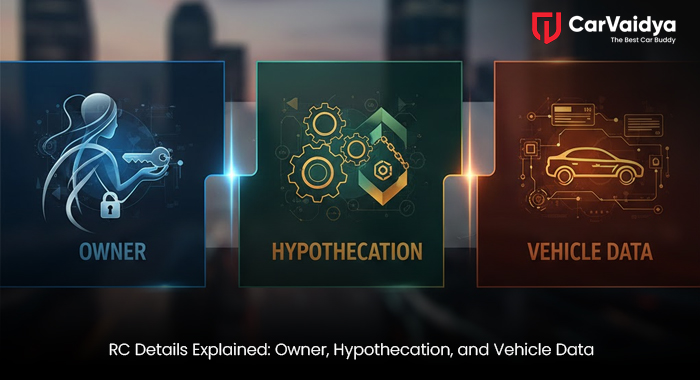
1. Car RC Owner Details
The first and most important section
is the owner's information.
It includes:
- Owner’s full name
- Father’s or husband’s name (in some cases)
- Permanent address
- Registration number
- Date of registration
These car RC owner details
confirm who legally owns the vehicle. If you are buying a used car, always
verify the RC ownership information carefully. Sometimes sellers try to sell
vehicles without properly transferring ownership, which can create legal
problems later. If the RC is not transferred in your
name after purchase, you can face issues like traffic challans coming to the
previous owner or even legal complications. So always double-check the vehicle
registration certificate details before making payment.
2.
Hypothecation in RC – What Does It Mean?
Many people get confused about the RC
hypothecation's meaning. Let’s make it simple.
Hypothecation in RC means the
vehicle is under loan. If you purchased your car with finance from a bank or
NBFC, the lender’s name will be mentioned in the RC.
For example:
“Hypothecated to XYZ Bank”
This means the bank has financial
ownership rights until the loan is fully repaid.
So when someone searches for hypothecation in RC, they usually want to know:
- Is there an active loan?
- Can I buy this car?
- How to remove hypothecation?
Why
Hypothecation Matters
If you plan to buy a second-hand
car, and hypothecation is still active, you must ensure:
- Seller clears the loan first
- Bank issues NOC (No Objection Certificate)
- Hypothecation removal is updated in RTO records
Without removing hypothecation, the
ownership transfer process will not complete smoothly. After loan closure, you need to
apply for hypothecation removal at the RTO. Once approved, the RC will no longer
show the bank’s name.
3.
Vehicle Data in RC
Another important part of vehicle
data in RC includes technical details of the vehicle.
This section contains
- Engine number
- Chassis number
- Vehicle class (LMV, MCWG, etc.)
- Fuel type (Petrol, Diesel, CNG, Electric)
- Cubic capacity (CC)
- Manufacturing year
- Seating capacity
- Color
This data helps authorities identify
the vehicle correctly. When people search for how to read RC details, they
are often confused between the engine number and chassis number.
Engine
Number
This is stamped on the engine block.
Chassis
Number
- This is the vehicle’s unique
identification number (VIN). It is extremely important during insurance claims
or theft cases.
- If you are buying a used car, match
the chassis number physically with what is mentioned in the RC. Never skip this
step.
4.
Registration Validity and Other Important Information
RC also shows:
- Registration validity date
- Tax paid details
- Fitness certificate (for commercial vehicles)
- Insurance details (sometimes updated)
For private vehicles in India,
registration is usually valid for 15 years. After that, you must renew it as
per RTO rules. When checking car registration details in India, always verify whether the RC is active and valid. Expired
registration can cause penalties and even vehicle seizure.
Why
Understanding RC Details is Important
Understanding RC details explained
properly helps you:
- Avoid fraud while buying used cars
- Confirm ownership authenticity
- Check active loan status
- Verify vehicle specifications
- Ensure a smooth transfer process
If you ignore RC ownership
information, you may face future legal issues. Many buyers only check the car's
condition but forget to verify the documents properly. That is a big mistake. If you are unsure about
documentation or vehicle history, platforms like CarVaidya can help you
inspect and verify vehicle records professionally before purchase. It saves time
and reduces risk in the long term.
How
to Read RC Details Online
Today, you can easily check vehicle
registration certificate details online through the Parivahan portal.
You only need:
- Vehicle registration number
The portal shows:
- Owner name
- Registration status
- Fuel type
- Vehicle age
- Hypothecation status
This makes it easier for buyers to
verify the RC hypothecation meaning and confirm if the vehicle has a pending loan.
Common
Mistakes People Make with RC
- Not transferring ownership after purchase
- Forgetting to remove hypothecation after loan closure
- Ignoring mismatched engine or chassis numbers
- Driving with expired registration
These small mistakes can create big
legal and financial problems.
RC is not just a small card; it is
the legal identity of your vehicle. Once you understand the RC details explained
clearly, you can confidently check the car RC owner details, hypothecation in RC,
and vehicle data in RC without confusion. Whenever you plan to buy, sell, or
verify a vehicle, always read the RC details carefully. It may look simple, but it
carries very important legal information. Understanding your vehicle
registration certificate details today can save you from stress tomorrow. And
honestly, most people realize its importance only when a problem happens. So
better to check everything in advance and stay safe on the road.
You can read some other articles
Common Mistakes New Drivers Make Without Proper Training
Common Breakdown Situations Where Roadside Assistance Saves the Day



 By CarVaidya
0 Comments