The return of
the iconic Sierra by Tata Motors has created a lot of excitement among Indian
car buyers. What makes it even more interesting is that the SUV will be offered
in both electric and petrol/diesel versions. This has started a common debate —
Tata Sierra EV vs ICE version, which one should you choose? In this blog,
we explain the Tata Sierra EV vs ICE comparison in a simple and
practical way, so you can understand which version suits your needs better.
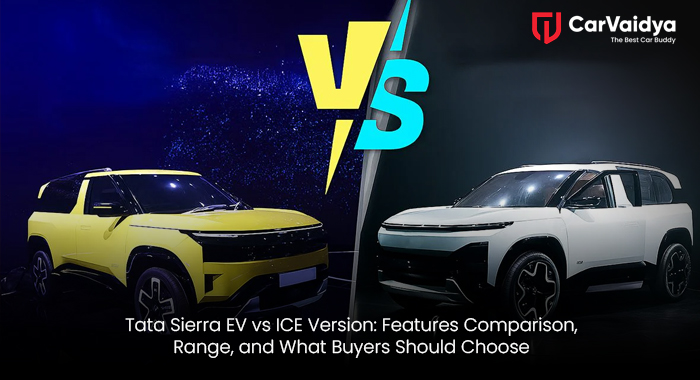
Tata Sierra EV vs ICE: Design and Feature Comparison
When we look at
the Tata Sierra features comparison EV vs ICE, both versions will carry
a similar retro-inspired design with a modern twist. The boxy silhouette, large
glass areas, and bold styling will remain common. However, the EV
version is expected to feel more futuristic inside. It may come with a cleaner
dashboard layout, larger screens, and more advanced tech features. The ICE
version, on the other hand, will have a more traditional cabin feel with
physical controls and a familiar driving setup. Both versions
are likely to offer premium features like a panoramic sunroof, a large
infotainment system, connected car tech, and advanced safety features, including
ADAS. But overall, the EV version may feel slightly more premium and modern.
Tata Sierra EV Specifications and Performance
Talking about Tata Sierra EV specifications, the electric version is expected to be built on
Tata’s advanced EV platform. It will likely get a battery pack between 60 to 80
kWh. The expected
driving range is around 450 to 550 km on a full charge, though real-world
figures may vary depending on driving conditions. The EV will also support fast
charging, making it more convenient for long trips. Another big
advantage is instant torque delivery. This means quicker acceleration and a
smoother driving experience, especially in city traffic. Also, since there is
no engine noise, the overall cabin experience becomes more silent and refined.
Tata Sierra ICE Specifications and Mileage
Now, let’s
understand the Tata Sierra ICE specifications. The petrol and diesel
versions will likely use engines already seen in other Tata SUVs.The petrol
variant may get a 1.5-litre turbocharged engine, while the diesel version could
use the 2.0-litre engine from Harrier and Safari. Buyers will also get manual
and automatic gearbox options. In terms of
fuel efficiency, the expected mileage is around 15 to 20 km per litre. While
this is lower compared to EV range numbers, ICE cars offer the advantage of
quick refueling anywhere in India.
Tata Sierra EV Range vs ICE Mileage
The biggest
difference in the Tata Sierra EV range vs ICE mileage comparison lies in
how energy is consumed and refilled. The EV version
can offer up to 500 km range on a single charge, which is impressive for daily
use and even highway trips. However, charging time and the availability of charging
stations can affect convenience. On the other
hand, the ICE version offers around 15–20 km/l mileage and can be refueled
within minutes at any fuel station. This makes it more practical for
long-distance travel and rural areas.
So, while EV
looks better on paper, ICE still wins in terms of ease of use.
EV vs ICE Cars India Comparison
Looking at the
broader EV vs ICE cars India comparison, both technologies have their
own advantages. EVs offer
significantly lower running costs, usually around ₹1–2 per km, and require less
maintenance because they have fewer moving parts. They are also environmentally
friendly and provide a smooth driving experience. ICE cars,
however, are still more convenient in India due to widespread fuel
availability. They usually have a lower upfront cost and are easier to service,
especially in smaller towns. This is why
many buyers are still confused about which is better, an EV or an ICE car in India,
as both options are practical in different ways.
Tata Sierra Electric vs Petrol Diesel: Practical Usage
When comparing the Tata
Sierra electric vs petrol diesel, your daily usage plays a very important
role. If your driving
is mostly within the city and you have access to home charging, the EV version
makes more sense. It will save money in the long run and offer a better driving
experience. But if you
frequently travel long distances or live in an area with limited charging
infrastructure, the ICE version will be more convenient and stress-free.
Maintenance and Ownership Experience
Maintenance is
another important factor in the Tata Sierra EV vs ICE comparison. EVs
generally require less maintenance because they do not have engine components
like oil filters, spark plugs, or clutch systems. However,
battery health and replacement costs should be considered in the long term. ICE vehicles
require regular servicing, including oil changes and engine maintenance. If you
ever face issues like warning lights or unusual performance, platforms like CarVaidya
can help you get expert advice and reliable service support.
Tata Sierra EV vs ICE: Which One Should You Choose?
The final
decision in Tata Sierra EV vs ICE which to choose, depends on your
lifestyle and driving needs. If you want a
modern, future-ready vehicle with low running costs and mostly drive in cities,
the EV version is a great choice. If you prefer
convenience, long-distance flexibility, and easy refueling, the ICE version
remains a practical option.
The Tata
Sierra EV vs ICE comparison clearly shows that both versions are designed
for different types of buyers. The EV version represents the future of
mobility, while the ICE version continues to offer reliability and convenience. Before making a
decision, consider your daily driving pattern, charging access, and budget.
That will help you choose the right Sierra for your needs without confusion.
You can read some other articles
Car Service Cost in India: What You're Actually Paying For
Best Car Fragrance Collections that you can buy online
5 Driver mistakes that lead to road accidents. Don’t dare to do



 By CarVaidya
0 Comments