Your car tyres are the only contact between your vehicle and the road, yet they are often the most ignored part when it comes to maintenance. Healthy tyres don’t just ensure smooth driving but also play a major role in your safety and mileage. Whether you drive daily in city traffic or take long highway trips, knowing how to
check tyre health regularly can save you from breakdowns and costly replacements.
In this blog, we’ll cover some quick and easy car tyre maintenance tips that will help you understand your tyres’ condition in just a few minutes. Let’s get started.
1. Do a Visual Tyre Inspection
One of the easiest ways to start your tyre health check is by simply observing them. Walk around your car and look closely at each tyre. Check if there are any visible cuts, cracks, or bulges on the sidewalls. These signs indicate that your tyre might be getting weak or damaged. Also, keep an eye out for any stones, nails, or sharp objects stuck in the tread. Even a small object can cause a slow puncture over time. A simple tyre inspection guide like this helps you prevent serious damage before it’s too late.
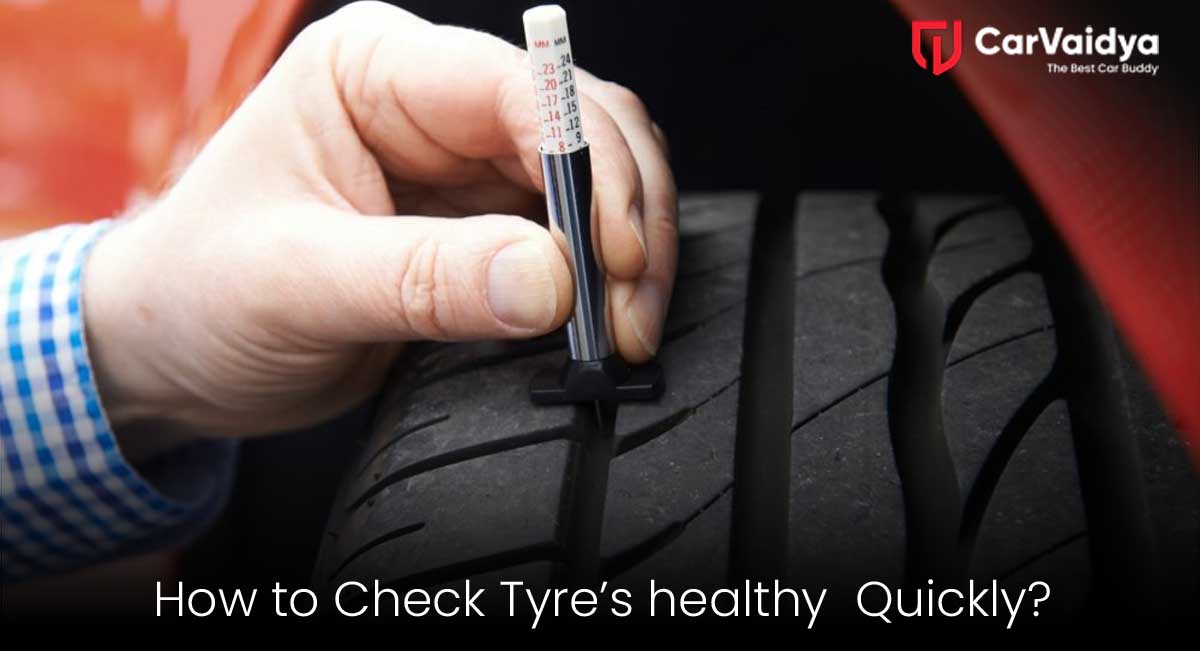
2. Check the Tread Depth
Your tyre tread is the main factor that ensures proper road grip, especially on wet or slippery surfaces. If the tread depth reduces, your car’s braking distance increases, making driving risky. Here’s a simple tyre wear check method you can try at home: Take a one-rupee coin and insert it between the tread grooves. If the outer band of the coin is visible, your tread has worn out, and it’s time for a replacement. Ideally, the tread depth should not go below 1.6mm. Worn-out tyres not only reduce control but also affect fuel efficiency. Make it a habit to check tread depth once every month.
3. Monitor Tyre Pressure Regularly
Underinflated or overinflated tyres are one of the biggest reasons behind uneven wear and poor mileage. Keeping the right pressure ensures your tyres last longer and provide better grip. You can do a car tyre pressure check using a portable tyre pressure gauge or at any nearby fuel station. Always refer to the manufacturer’s recommended pressure mentioned on your car’s door frame or owner’s manual. Low pressure causes the tyre to flex more, generating heat and reducing its lifespan. On the other hand, overinflation makes the ride harsh and reduces traction. Therefore, it’s essential to strike a balance and apply the right amount of pressure.
4. Check for Uneven Wear Patterns
Uneven wear on tyres is a clear sign that something isn’t right with your wheel alignment or suspension system. If you notice one side of the tyre wearing faster than the other, it’s time to
visit a service center for inspection. This simple check of the car tyre condition step can help detect hidden alignment or balancing issues early. Getting your wheels aligned every 5,000–10,000 km is a good rule of thumb for better tyre life and smoother driving.
5. Rotate Your Tyres Timely
Rotating your tyres is another important part of car tyre care. It ensures that all tyres wear evenly and last longer. The general rule is to rotate tyres every 8,000 to 10,000 km, or as recommended in your car manual. For example, in a front-wheel drive car, the front tyres wear faster due to the extra load. Rotating them with the rear ones helps balance the wear and improves handling. If you don’t rotate tyres regularly, you may end up replacing two tyres earlier than needed. A small step like this can save you money in the long run.
6. Look for Vibration or Noise While Driving
Sometimes your tyres might look fine visually, but you may still feel vibrations or hear unusual noises while driving. This could be due to unbalanced tyres, uneven wear, or internal damage. If you feel vibration even on smooth roads, get your tyres balanced at once. Ignoring such signs not only damages your tyres but also affects your car’s suspension and steering system. These small tyre safety tips go a long way in ensuring your comfort and safety every time you drive.
7. Keep an Eye on Tyre Age
Even if your tyres look fine and have enough tread, they shouldn’t be used forever. Rubber naturally degrades over time due to heat, sunlight, and road conditions. Most tyre manufacturers recommend replacing tyres every 5–6 years, regardless of mileage. You can check the manufacturing date printed on the sidewall — it’s a four-digit number (for example, 2220 means the tyre was made in the 22nd week of 2020). Ageing tyres may lose flexibility and can crack easily, which increases the risk of sudden blowouts.
8. Professional Tyre Inspection Matters
While self-checks are helpful, getting your tyres inspected by professionals is equally important. They can detect internal damages, sidewall bubbles, and other hidden issues that are not visible to the naked eye.
For complete inspection and car care, you can
book a CarVaidya tyre inspection. Their experts use advanced tools to measure tyre health, pressure, and wear patterns to ensure your car remains safe and reliable on every drive.
Healthy tyres mean a safer and smoother drive. Make tyre checks a part of your regular car maintenance routine. Follow these car tyre maintenance tips once every month, and you’ll not only improve your car’s performance but also save money on fuel and replacements.
Remember, tyre care isn’t just about avoiding punctures — it’s about ensuring safety for you and your loved ones on every trip. So next time you think about car maintenance, don’t forget to start with your tyres.



 By CarVaidya
0 Comments