Most car owners book a service because the reminder pops up or the service light starts blinking. But very few actually know what happens during car service once the vehicle goes inside the workshop. Is it just an oil change and a wash, or something more? A professional car service follows a detailed and systematic process designed to keep your car safe, reliable, and smooth to drive. In this guide, we break down the complete car servicing steps so you know exactly what you are paying for and why it matters.
Step 1: Initial Car Inspection and Job Card Creation
The car servicing process always begins with a basic inspection. The service advisor notes down your car details, mileage, and any issues you mention, like strange noises, low pickup, or warning lights. This stage is important because it creates the foundation of the car service checklist. If you skip explaining problems properly, some issues might remain unnoticed. A professional workshop also checks previous service history to plan the right maintenance.
Step 2: Under-Bonnet Inspection
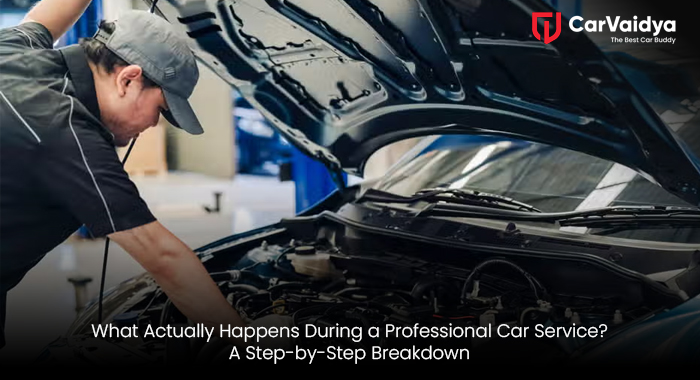
Once the job card is ready, technicians start with an under-bonnet check. This is a key part of car service inspection.
They inspect:
- Engine oil condition
- Coolant level
- Brake fluid and clutch fluid
- Power steering oil
- Battery health and terminals
If engine oil looks dirty or thin, replacement becomes mandatory. Many people think an oil change is optional, but it is not. Regular oil change is the heart of periodic car maintenance, and skipping it slowly damages engine life.
Step 3: Engine Oil and Oil Filter Replacement
In most professional car service packages, engine oil and oil filter replacement are included. Old oil is completely drained and replaced with fresh oil as per the manufacturer's recommendation. Oil filter traps dirt and metal particles, so replacing it is as important as changing oil. Without this step, your engine keeps circulating dirty oil. This is one of the most important complete car servicing steps.
Step 4: Brake System Inspection
Brakes are inspected carefully during a step-by-step car service. Technicians check:
- Brake pads thickness
- Disc or drum condition
- Brake fluid level
- Any unusual noise or vibration
If brake pads are worn out, they suggest replacement. This step ensures safety, especially for city driving, where sudden braking is common. Ignoring brake inspection can lead to expensive repairs later, or worse, unsafe driving conditions.
Step 5: Suspension, Steering, and Tyre Check
This part of the car servicing process focuses on ride comfort and handling. Mechanics inspect suspension components, steering joints, and wheel alignment. They also check tyre condition, air pressure, and tread depth. Uneven tyre wear often indicates alignment or suspension problems. Proper tyre inspection improves fuel efficiency and makes driving smoother. This is why what happens during car service is much more than just engine work.
Step 6: Electrical and Diagnostic Scan
Modern cars rely heavily on electronics. During a professional car service, technicians connect a diagnostic scanner to detect hidden errors.
They check:
- Engine error codes
- ABS and airbag system
- Sensors and ECU health
- Battery charging system
Even if no warning light is visible, minor errors can exist. A timely diagnostic scan saves future trouble and repair costs.
Step 7: Air Filter, AC Filter, and Cooling System Check
Air filters affect engine breathing and mileage. AC cabin filters control the inside air quality. Dirty filters reduce performance and cooling.
Technicians inspect and clean or replace:
- Engine air filter
- Cabin AC filter
- Radiator and cooling fan
This step improves engine response and AC cooling, especially in Indian driving conditions.
Step 8: Car Wash and Interior Cleaning
After mechanical work, most workshops include a basic car wash. Exterior cleaning removes grease and dirt, while interior vacuuming improves cabin hygiene. Though it looks simple, a clean car also helps spot leaks or scratches easily later. It completes the professional car service experience.
Step 9: Final Quality Check and Test Drive
Before handing over the car, technicians perform a final quality inspection. They verify fluid levels, recheck bolts, and ensure everything works fine. A short test drive confirms that engine response, brakes, steering, and suspension feel normal. This final step ensures the car service checklist is properly completed.
Why Professional Car Service Matters
Many people delay servicing to save money, but that approach often backfires. Regular periodic car maintenance improves fuel efficiency, reduces breakdown risk, and increases vehicle resale value. Platforms like CarVaidya help car owners understand and book transparent servicing options without confusion. Choosing a reliable service provider makes a big difference in long-term car health.
Now you know exactly what happens during car service from start to finish. It is a detailed process, not just an oil change and wash. Each step plays a role in keeping your car safe and reliable. Understanding the step-by-step car service process also helps you avoid unnecessary upselling and make informed decisions. A well-maintained car not only runs better but also gives peace of mind on every drive.
You can read some other articles



 By CarVaidya
0 Comments