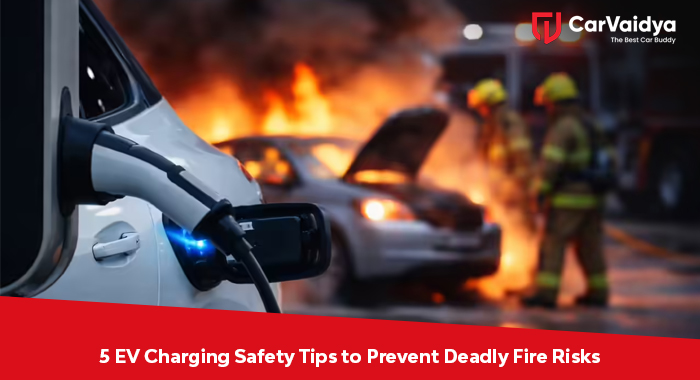
The tragic incident that took place on the morning of March 18 in Indore is a warning for the entire country. While charging an electric car at home, a short circuit suddenly triggered a massive fire that spread within minutes. In this heartbreaking accident, 8 people lost their lives, and 4 others were seriously injured. The fire spread so rapidly that it engulfed a three-storey house, leaving those trapped inside with no chance to escape.

How did such a major accident happen in Indore?
The incident occurred in Greater Brijeshwari Colony near Bengali Square in Indore between 3:30 AM and 4:00 AM. An electric car parked outside the house was connected to a charger when a sudden short circuit caused it to catch fire. Within minutes, the flames spread to the entire house. Gas cylinders inside the home also caught fire, leading to multiple explosions. The intensity of the blasts was so severe that a part of the building collapsed. Tragically, the digital lock installed in the house failed to open in time, preventing residents from escaping and making the situation even more fatal.
Why can EV charging be dangerous?
Charging an electric vehicle is different from using regular household electrical appliances because it involves a continuous flow of high-voltage current. If there is even a minor issue in the wiring, charger, or electrical connections, it can quickly lead to overheating or a short circuit. The Indore incident clearly highlights how improper installation or low-quality equipment can pose serious risks. A small technical fault can turn into a life-threatening disaster within minutes. When installing an EV charging point at home, the most important step is to get the work done by a certified and experienced electrician. Incorrect wiring or loose connections can gradually create risks that may suddenly turn into a major accident. Always use the charger and cable provided by the vehicle manufacturer. Cheap or locally made equipment often fails to meet safety standards and can overheat quickly, leading to fire hazards. It is also essential to have a separate, dedicated electrical line for EV charging. This ensures that the charging load does not affect other household appliances and allows the system to operate safely.
Importance of proper location and safety devices
The charging point should always be installed in a well-ventilated area, away from any flammable materials. Charging in enclosed spaces can cause heat to build up, significantly increasing the risk. Safety devices such as MCB (Miniature Circuit Breaker) and RCCB (Residual Current Circuit Breaker) are crucial, as they immediately cut off the power supply in case of any fault. Proper earthing is equally important, as it helps prevent current leakage and enhances overall safety.
What precautions should be taken during charging?
An electric car should not be left unattended for long periods while charging, as this can be risky. If the charger or cable becomes unusually hot, charging should be stopped immediately. Avoid keeping any flammable items nearby, and ensure that water or moisture does not come into contact with the charging setup. Small precautions can go a long way in preventing major accidents.
What are the technical causes of a short circuit?
A short circuit occurs when electric current deviates from its intended path and flows through an unintended or shorter route. This is extremely dangerous because it allows a sudden surge of high current. If the charging cable is damaged or its insulation wears out, the internal wires may come into contact with each other, causing a short circuit. Similarly, low-quality chargers may lack proper safety mechanisms, making even minor voltage fluctuations dangerous. Moisture or water intrusion is another major cause. Water acts as a conductor and can connect positive and negative terminals, increasing the risk of sparking and fire. Additionally, overloading a regular household socket can cause wires to overheat, melt, and eventually lead to a short circuit.
How to prevent such dangerous accidents
To avoid such incidents, always use certified chargers and regularly inspect cables and connections. Ensure that your home has proper earthing, and never touch plugs with wet hands during charging. It is also important to check that cables are not damaged, bent, or frayed.
Source :https://hindi.drivespark.com/four-wheelers/2026/indore-ev-charging-fire-tragedy-safety-tips-to-prevent-electric-car-charging-accidents-039909.html



 By CarVaidya
0 Comments