


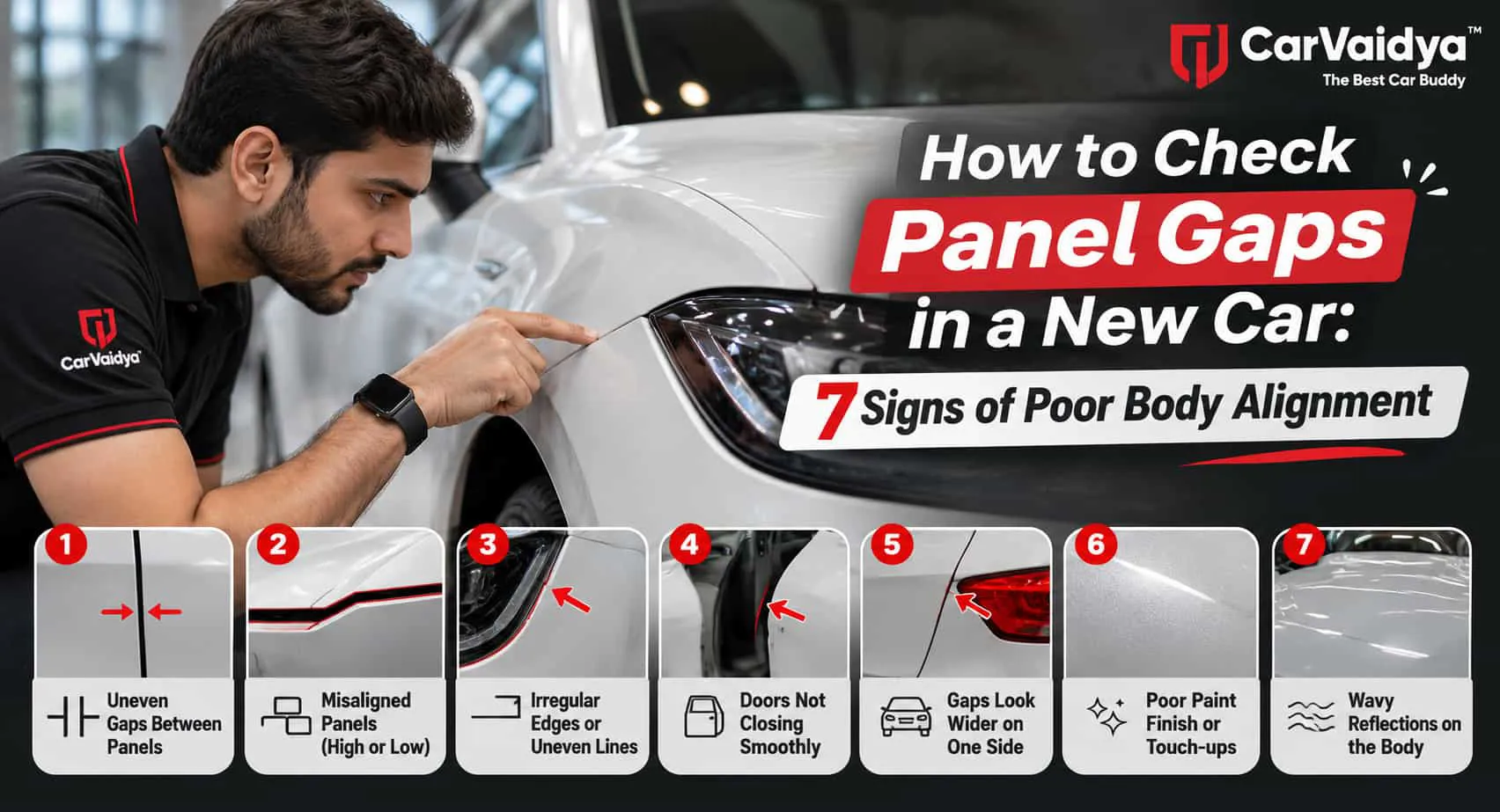
How to Check Panel Gaps in a New Car: 7 Signs of Poor Body Alignment
 By CarVaidya
- 09 Nov 2026
On delivery day, most buyers check the colour, the features and the paperwork, then drive off. Very few look closely at the thin gaps between the doors, bonnet, boot and fenders. Uneven panel gaps aren't always just a cosmetic issue. They can point to a poorly fitted part, transit damage, or even a repair done at the dealership before the car reached you.
The best time to catch these problems is before you accept delivery, when the dealer still has to fix them. This guide explains what panel gaps are, how to check them in a few minutes, the seven signs of poor body alignment, and what to do if something looks wrong.
Quick Answer
To check panel gaps on a new car, look at the gaps around the doors, bonnet, boot, and fenders in good daylight. Compare the left and right sides, and check that each gap stays the same width along its full length. Warning signs include uneven or tapering gaps, panels that sit higher or lower than the next one, doors that are hard to close or don't line up, misaligned bumpers or lights, paint differences near the gaps, wind or water leaks, and scratches or tool marks on bolts and hinges. Report any issue to the dealer before you sign the delivery papers.
What Are Panel Gaps?
A car's body is made of separate panels — doors, bonnet, boot lid, fenders and bumpers. Panel gaps are the narrow spaces between them. Manufacturers design these gaps to be a specific width so the panels can open, close, and move slightly without rubbing against each other.
On a well-assembled car, the gaps look neat and consistent. Every brand has its own tolerance, so some cars naturally have slightly wider or narrower gaps than others. What matters is consistency: the gap should look the same from one end to the other, and match on the left and right sides of the car.
Why Panel Gaps Matter on a New Car
- They can reveal hidden damage. A new car travels from the factory to the stockyard and dealer by truck or train. Minor damage during transit or at the yard is sometimes repaired before delivery. Uneven gaps are often the first clue.
- They affect sealing. Poorly aligned doors and boot lids can let in wind noise, dust, and rainwater — a real concern during the monsoon.
- They affect wear. Misaligned panels can rub, chip paint, or put extra stress on hinges and locks over time.
- They affect resale value. Used car inspectors check panel gaps to spot accident history. Uneven gaps can raise questions even if the car was never in an accident.
How to Check Panel Gaps: Step by Step
Before you start
- Inspect the car in daylight, outdoors if possible. Showroom lighting and dim stockyards hide a lot.
- Make sure the car is clean. Dust and protective film can hide uneven edges.
- Park on level ground so the body sits evenly.
- Use your phone camera to take photos of each gap. Zooming in later makes differences easier to see.
Where to look
- Bonnet: Check the gaps between the bonnet and both front fenders, and between the bonnet and the headlamps and grille.
- Front doors: Check the gap between each front door and the fender, and between the front and rear doors.
- Rear doors: Check the gap between each rear door and the rear quarter panel.
- Boot or tailgate: Check the gaps on both sides and along the bottom edge, and around the tail lamps.
- Bumpers: Check where the front and rear bumpers meet the fenders and lights.
- Fuel lid: Small, but a misaligned fuel flap can be a sign of rough handling.
How to judge the gaps
- Compare left with right. The gap between the bonnet and the left fender should look the same as on the right.
- Follow each gap from end to end. It shouldn't get wider at one end and narrower at the other.
- Use a simple guide. Sliding a coin or a plastic card gently along the gap can help you feel width changes. Be careful not to scratch the paint.
- Check the height, not just the width. Run your finger lightly across the joint. The two panels should feel level.
- If unsure, compare with another car. Look at a display car of the same model in the showroom.
7 Signs of Poor Body Alignment
1. Uneven gaps between left and right
If the gap around the bonnet is clearly wider on one side, or one front door has a bigger gap than the other, a panel may be misaligned or has been removed and refitted. This is the most common and easiest sign to spot.
2. Gaps that taper along their length
A gap that is wide at the top and narrow at the bottom (or the other way round) suggests the panel isn't sitting straight. On doors, it often points to a hinge that needs adjustment.
3. Panels not flush with each other
When one panel sits higher or lower than the panel next to it, you'll feel a step at the joint. Common spots are where the bonnet meets the fender, or where the door meets the rear quarter panel.
4. Doors, bonnet or boot that are hard to close
A door that needs to be slammed, doesn't latch the first time properly, or sits slightly open at one corner may be misaligned with its striker or frame. The same goes for a bonnet or boot that doesn't close evenly.
5. Misaligned bumpers, lights or trims
Check that headlamps and tail lamps sit evenly in their openings, and that bumpers line up neatly with the fenders. A bumper that sticks out on one side or has uneven gaps around the lights may have been removed or replaced.
6. Paint differences near the gaps
Look closely at the paint on panels next to an uneven gap. A slightly different shade, orange-peel texture, overspray on rubber seals, or paint dust on trims are signs the area may have been repainted. A paint thickness gauge, used by professional inspectors, can confirm this.
7. Tool marks, wind noise or water leaks
Open the doors, bonnet and boot and look at the bolts on hinges and fenders. Factory bolts usually have intact paint. Scratches or tool marks suggest the panel was removed or adjusted. On the test drive, listen for wind noise at speed, and check for damp patches or water marks near door seals and in the boot.
Quick Reference: What You See and What It Could Mean
| What you notice | Possible cause |
|---|---|
| Slightly uneven gap, no other signs | Factory fitment tolerance or minor adjustment needed |
| Tapering door gap, door hard to close | Hinge or striker misalignment |
| Uneven gap plus paint difference | Possible repair or repaint before delivery |
| Scratched bolts on hinges or fenders | Panel removed, replaced or adjusted |
| Bumper or lamp sitting unevenly | Loose clips, transit damage or part replaced |
| Wind noise or damp seals | Door or boot not sealing properly |
What to Do If You Find Uneven Panel Gaps
- Don't sign the delivery papers yet. Once you accept the car, it's much harder to get issues fixed or the car replaced.
- Take clear photos and videos of the gaps, paint, and bolts.
- Point out the issue to the sales or delivery team and ask whether the car has had any repairs or panel work.
- Get it in writing. If the dealer agrees to fix an alignment issue, ask for a written commitment on what will be done and by when.
- Ask for another car if there are signs of repainting or panel replacement. A brand-new car shouldn't have been repaired before you receive it.
- Check the VIN and manufacturing date on the car. An older-stock car that's been sitting at a yard is more likely to have picked up minor damage.
Minor gap differences within the manufacturer's tolerance are common and usually just need a quick hinge or striker adjustment. The real concern is when uneven gaps appear together with paint differences or tool marks.
Panel Gaps Are Just One Part of a Pre-Delivery Inspection
Body alignment is important, but a full Pre-Delivery Inspection (PDI) covers much more: paint condition, underbody damage, tyre manufacturing dates, odometer reading, electricals, fluid levels, battery health, documents and a diagnostic scan for stored fault codes. Checking all of this properly in a busy delivery bay isn't easy, especially if you don't know exactly what to look for.
Book a CarVaidya Pre-Delivery Inspection
Before you accept your new car, let an expert check it. A CarVaidya Pre-Delivery Inspection (PDI) covers panel gaps and body alignment, paint thickness, underbody, tyres, electricals, fluids and a diagnostic scan, and gives you a clear report to share with the dealer — so any problem is fixed before the car becomes yours.
Frequently Asked Questions
Are small differences in panel gaps normal on a new car?
Yes, small variations within the manufacturer's tolerance are normal. What matters is that the gaps look consistent along their length and match on both sides of the car. Obvious differences should be checked.
Can uneven panel gaps mean the new car was repaired?
They can. Uneven gaps, along with paint differences, overspray, or scratched bolts may indicate that a panel was removed, repaired, or repainted before delivery. Ask the dealer directly and get a professional inspection if you're unsure.
Can misaligned panels be fixed?
Often, yes. Many alignment issues are corrected by adjusting hinges, strikers, or mounting points. If the problem is due to a repair or replaced part, you may want to ask for a different car instead.
When should I check panel gaps on a new car?
Before you sign the delivery documents, ideally during a pre-delivery inspection in daylight. Once you accept the car, it's harder to get issues resolved.
Do uneven panel gaps cause leaks or noise?
They can. Poorly aligned doors and boot lids may not seal properly, which can lead to wind noise at speed and water entering during rain.
What tools do I need to check panel gaps?
For a basic check, just daylight, your eyes, and your phone camera. A coin or plastic card can help compare widths. Professional inspectors also use a paint thickness gauge to detect repainted panels.
Final Thoughts
Checking panel gaps takes only a few minutes, but it can tell you a lot about how your new car was built, transported and handled. Look for consistent gaps, flush panels, smooth-closing doors and matching paint. If anything looks off, raise it before delivery. A new car should arrive in the condition it left the factory — and a careful check helps make sure it does.
You can read some other articles
Check Engine Light On, but Car Runs Normally: Causes, Risks and Solutions
How to Check Car Loan Hypothecation on RC and Remove It After Loan Closure

0 Comments