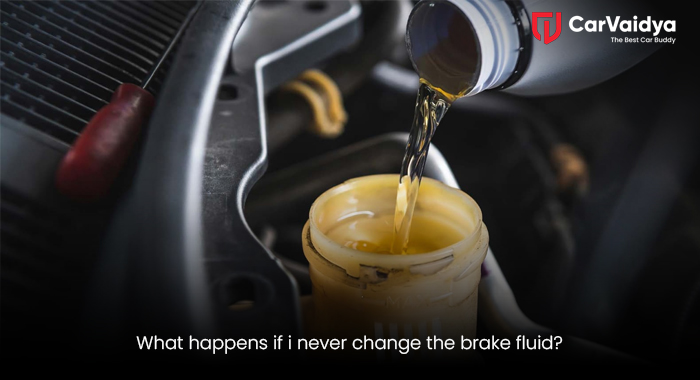
Many car owners focus on engine oil, wheel alignment, tyre rotation, or battery replacement, but they often ignore one of the most important fluids in the car — brake fluid. You may think: “What happens if I never change the brake fluid?” The short answer is your braking performance will degrade, you may face spongy brakes, ABS problems, and even complete brake failure.
Brake fluid plays a significant role in maintaining the health of your brake system. It transfers pressure from your foot to the brake pads and helps your car stop safely. Unlike engine oil, brake fluid doesn’t burn off, so people assume it lasts forever. But that’s not true — brake fluid absorbs moisture over time, and this single problem can slowly destroy the braking system from the inside. That’s why experts recommend regular brake
fluid change or brake fluid flush as per the manufacturer’s brake service interval.
Why brake fluid becomes unsafe over time
Brake fluid is hygroscopic — it attracts water from the atmosphere. Even if your reservoir cap is sealed, moisture in brake fluid starts building gradually. This moisture lowers the boiling point of the fluid. When brakes heat up during driving, the moisture forms vapour bubbles. Vapour compresses under pressure and results in spongy brakes.
That’s exactly why technicians insist on doing a timely brake fluid flush. Old fluid becomes dark, contaminated, and corrosive. If you never replace it, the rust and dirt affect brake lines, master cylinder, calipers, and ABS components.
What happens if I don’t change brake fluid?
Here are the major things that start happening inside your vehicle if you decide to ignore brake fluid forever:
1. Brakes become soft or spongy
You will feel like you have to press more, and the pedal sinks. This is because the vapour inside the lines compresses instead of transferring hydraulic force. Spongy brakes are a direct sign that you
need brake system maintenance urgently.
2. Longer stopping distance
Old fluid reduces braking power. In emergencies, the car may not stop fast enough, increasing the chances of a collision.
3. Brake fade during long drives
When you drive downhill or apply brakes repeatedly, heat builds up. Fresh fluid can handle heat, but old contaminated fluid boils sooner.
4. Risk of complete brake failure
Brake failure symptoms start slowly, but ignoring them could lead to zero braking pressure. Most accident cases related to brakes happen because of neglected brake fluid.
5. ABS pump damage
Modern cars use ABS pumps and valves. Contaminated fluid damages seals inside these pumps. ABS pump damage can cost a huge amount to fix — sometimes more than ₹30,000. A simple brake fluid change could save that expense.
6. Corrosion in brake lines
Moisture increases internal rust. Once brake lines corrode, they can burst under pressure, leading to sudden brake loss.
7. Sensor malfunction and warning lights
ABS, traction control, and brake warning lights might appear because the contaminated fluid interferes with sensor operations.
How often should you replace brake fluid?
Most manufacturers recommend a brake service interval of 2 years or around 30,000 to 40,000 km. Some modern vehicles stretch a bit more, but ignoring beyond that is risky.
If your car manual says 2 years, stick to it. If you drive in hilly areas, flooded roads, or heavy city traffic, you should do fluid checks even earlier.
Common brake failure symptoms you should not ignore
If you feel any of the below, get a brake fluid flush immediately:
- Spongy brakes
- Brake pedal feels too soft
- Car pulling to one side while braking
- Grinding noise from brakes
- ABS warning light
- Longer braking distance
- Overheating brakes
- Burning smell during downhill drive
These are brake failure symptoms that directly point to degraded fluid or air contamination.
Why new brake fluid improves safety
Fresh brake fluid:
- Restores pedal firmness
- Improves stopping ability
- Increases fluid boiling point
- Protects ABS and master cylinder
- Reduces corrosion in brake lines
- Enhances long-trip brake performance
Changing brake fluid is a small cost compared to the price of parts damaged due to moisture and corrosion.
Brake safety tips for car owners
If you want maximum stopping performance, follow these brake safety tips:
✔ Check brake fluid colour every 6 months
✔ Follow manufacturer's brake service interval
✔ Never open the reservoir unnecessarily
✔ Avoid mixing two different brake fluids
✔ Replace ABS fluid carefully in modern cars
✔ Don’t wait for brake fade to happen
Even if you maintain everything else, ignoring brake fluid can put you and your passengers at risk.
Moisture in brake fluid is the silent killer
Most drivers never realise that moisture enters the fluid even when the car is parked. The percentage may look small — 2 to 3% — but this tiny amount lowers the boiling point significantly. Hot vapours compress, fluids don’t flow properly, and brakes become unpredictable.
That unpredictability is what makes moisture a silent killer. You don’t get a sudden warning — the performance reduces slowly until one day the brake pedal stops responding.
ABS pump damage can burn your wallet
In modern cars, ABS pumps constantly regulate brake pressure to avoid wheel lock. When the fluid becomes sticky, dirty, and corrosive, the internal seals of the pump wear down. Replacing an ABS module is costly. Many owners sit in shock when the mechanic tells them that a ₹500–₹1,500 brake fluid change could have prevented a ₹25,000–₹45,000 repair.
Why brake fluid flush is better than just topping up
Topping up simply adds new fluid to contaminated fluid. A brake fluid flush completely replaces old liquid from lines, calipers, and ABS units. It removes air bubbles, moisture, and dirt.
If your fluid looks dark brown, milky, or black, don’t top up. Just flush it.
Trust professional brake care services
Brake fluid replacement needs proper bleeding tools and ABS-compatible systems. DIY experiments can introduce air into the lines and make brakes worse. Always go to a trusted technician.
CarVaidya offers expert support in
brake system maintenance, PDI checks, and mechanical diagnostics, helping you stay safe on the road.
If you keep wondering “What happens if I don’t change brake fluid?” — the answer is simple:
- You lose brake power
- You damage expensive parts
- You increase accident chances
- You risk total brake failure
Changing brake fluid is cheap, quick, and necessary. Don’t wait for brakes to turn spongy or for warning lights to appear. Stay proactive, stay safe.



 By CarVaidya
0 Comments